Iboga / Ibogaine
Ibogaine is one of the most promising substances in this field, and one of the most genuinely dangerous. If Ashta ever builds an evidence programme around an ibogaine retreat, it does so the way Tobias Erny's world does: safety first, screening first, and honest about the risk.
Our Stance
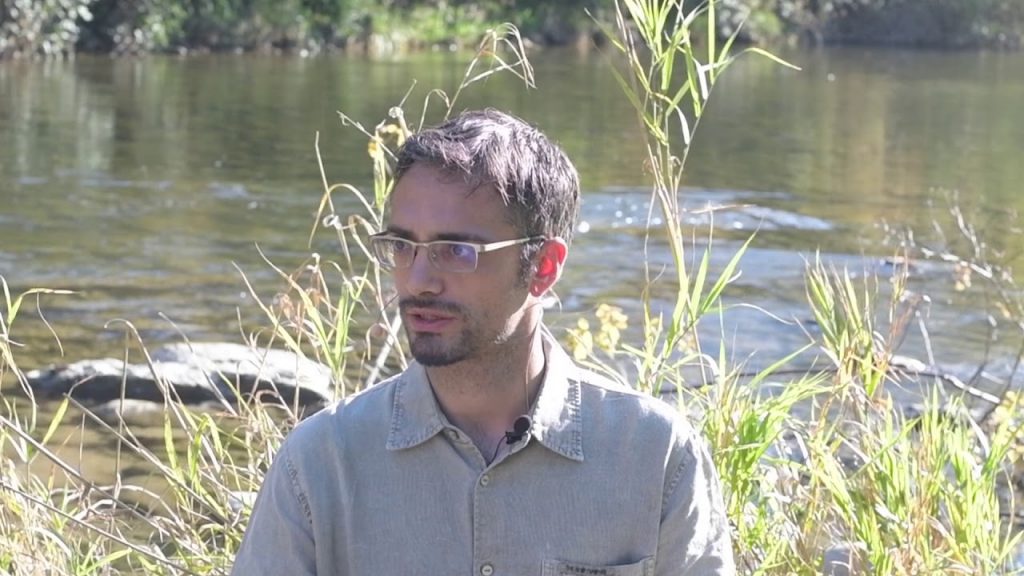
We present Tobias Erny's public work and the Global Ibogaine Therapy Alliance's published safety standards as a reference. Please note: Tobias Erny has no affiliation with, partnership with, or promotional agreement with the Ashta Project. We describe and link his public work purely as part of the lineage and safety framework our retreat research would build on; any future named collaboration would be confirmed in writing, with his consent, before it appeared here.
The Work
Tobias Erny began in the pharmaceutical and chemical industry in Basel before turning, from 2006, to iboga and ibogaine as a therapist, researcher and activist. He is an executive director and board member of the Global Ibogaine Therapy Alliance (GITA), the non-profit best known for publishing the field's clinical guidelines for ibogaine-assisted work and for running provider safety training (including ACLS for ibogaine). He wrote a German-language reference work on iboga, organises the Iboga Leadership Summit in Gabon, and has lectured on iboga and ibogaine microdosing in the University of Zurich's Frontiers in Psychedelic Science series. His peer-reviewed work includes a case report on ibogaine for the treatment of Parkinson's disease (Journal of Psychedelic Studies, 2026). It is a single documented case, an early signal rather than proof.
"Ibogaine for Parkinson's Disease" by Tobias Erny, Psychedelics as Medicine (Iceland 2025), GITA channel. ID: tMvSV8IQsKk
For a fuller picture of his work, here is a long-form conversation on iboga and ibogaine therapy covering the practice, the tradition, and the risks:
"Iboga, with Tobias Erny", long-form interview (Alistair Langer, 2022). ID: 8k8TyKstD88
Safety First: read this before anything else
This is the part responsible operators lead with, and so do we. Ibogaine blocks the heart's hERG potassium channel, which can prolong the QT interval and, in the wrong circumstances, trigger dangerous arrhythmia. People have died. That is precisely why a body like GITA exists and why its guidelines are the credible standard. Any honest ibogaine-retreat evidence programme has to be built around screening and monitoring, not vibes:
Ashta's role here is not to provide treatment. It is to measure outcomes around legally and medically supervised work, with the safety layer treated as non-negotiable: a "safety-critical" tier of data that always comes first.
The Public Research
The clinical interest is real but early. A 2024 observational study in Nature Medicine reported that magnesium-ibogaine therapy in special-forces veterans produced substantial reductions in disability and PTSD symptoms (DOI 10.1038/s41591-023-02705-w). As mainstream reviewers stress, though, it was observational and uncontrolled, and must be read with reserve. Public policy is moving too: Texas Senate Bill 2308 created the largest US state-funded ibogaine research programme. Ashta tracks this public research; it does not run ahead of it. The same studies are summarised on the retreats page.
Why it matters to Ashta's retreats
Ibogaine is the clearest case for Ashta's whole discipline: a substance with real signal and real danger, where the honest move is to measure carefully and never overclaim. Erny's world (GITA's guidelines, the screening culture, the published case reports) is the safety and evidence backbone any Ashta ibogaine work would sit inside. We would wrap the outcome metrics described on the retreats page around medically-supervised, legal sessions: craving and substance-use measures, trauma and TBI symptom scales, well-being and goal-attainment tracking. Every one carries its evidence-strength label, and every null is published.
Resources & Links
What we'd never claim
We won't tell you ibogaine is a cure, that it is safe to take lightly, or that a retreat will fix trauma, addiction, or a brain injury. The evidence is early and the cardiac risk is real. Ashta provides no medical, diagnostic, or treatment service; we measure outcomes around legal, supervised, screened work, and we publish what we find, including the times it finds nothing. See how we'd measure a retreat.